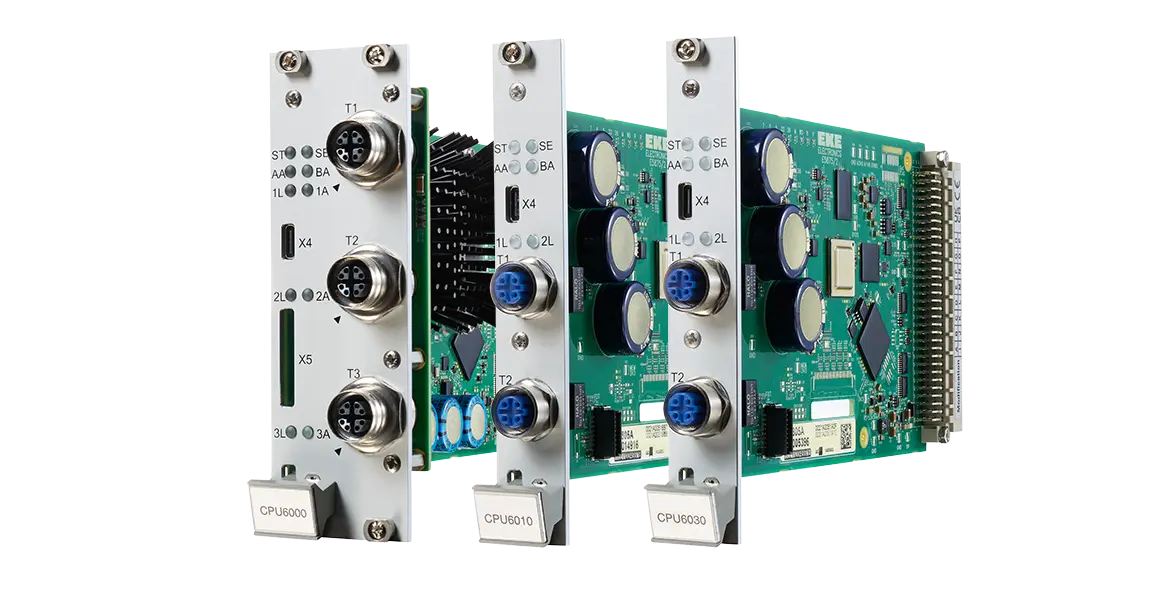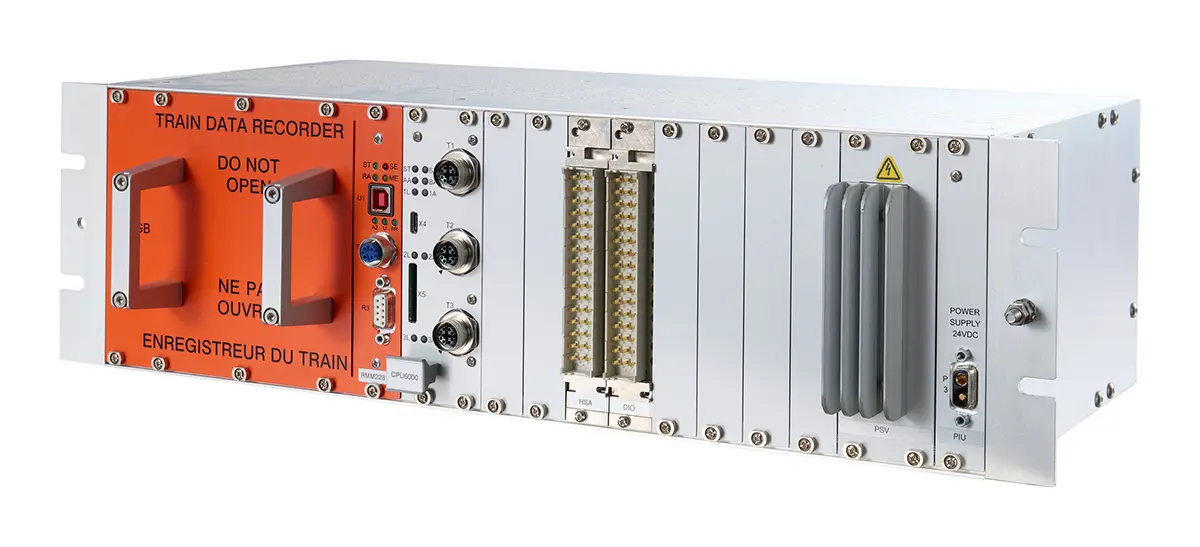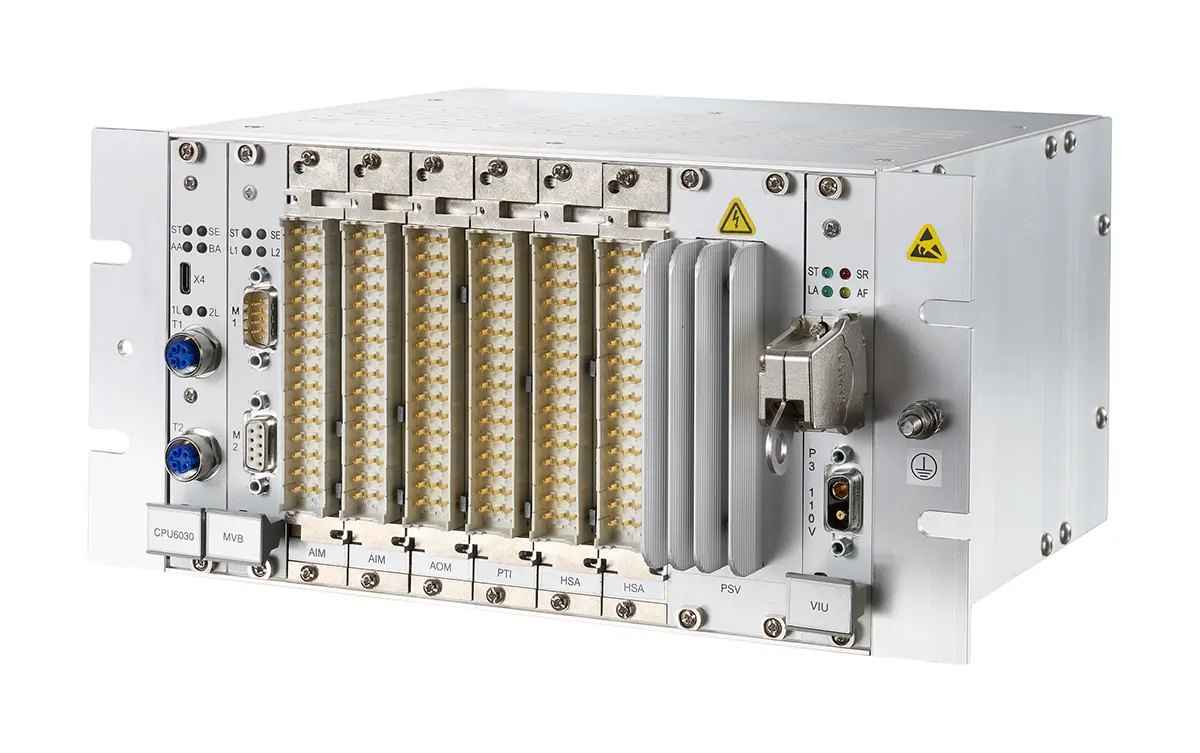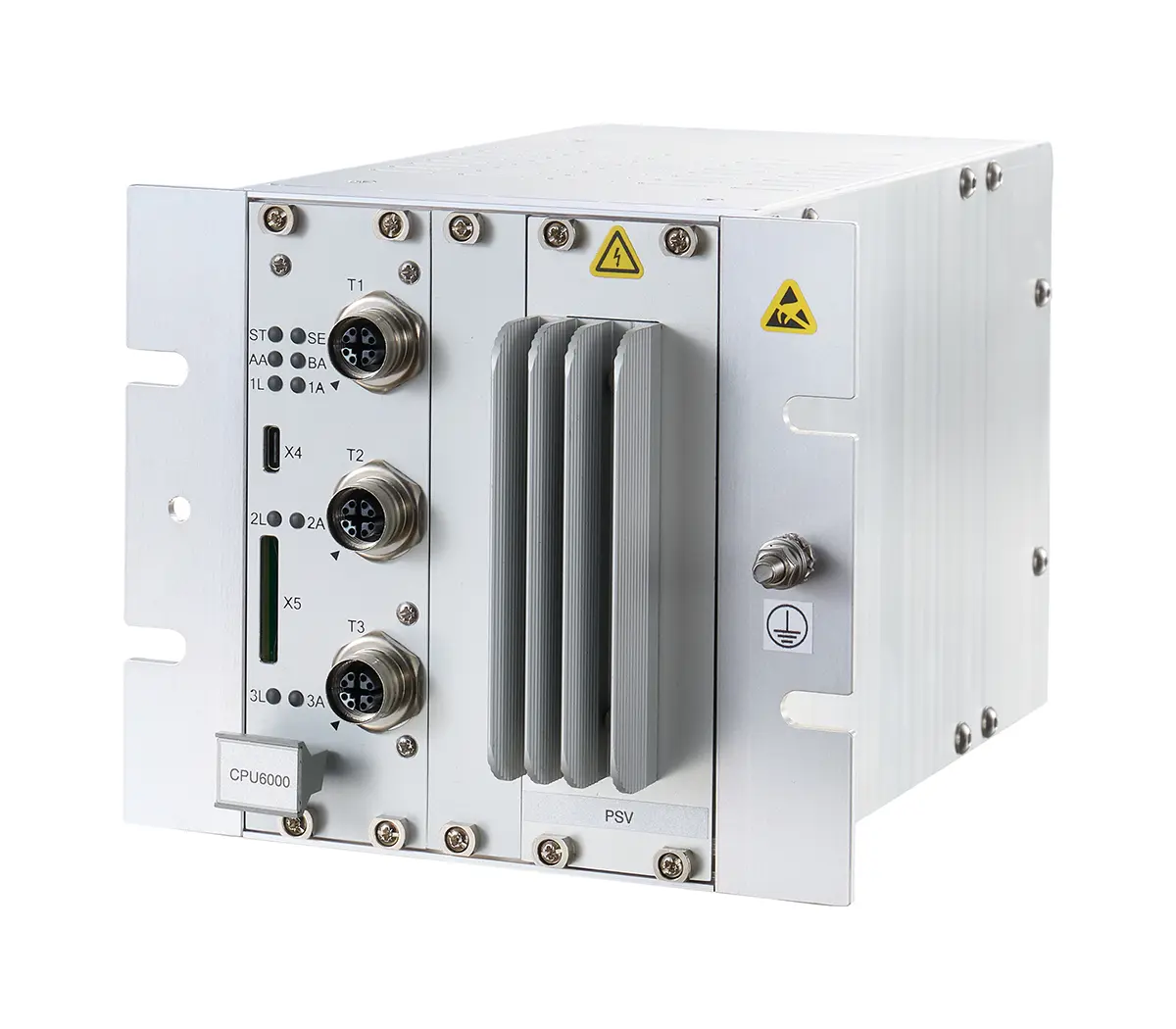
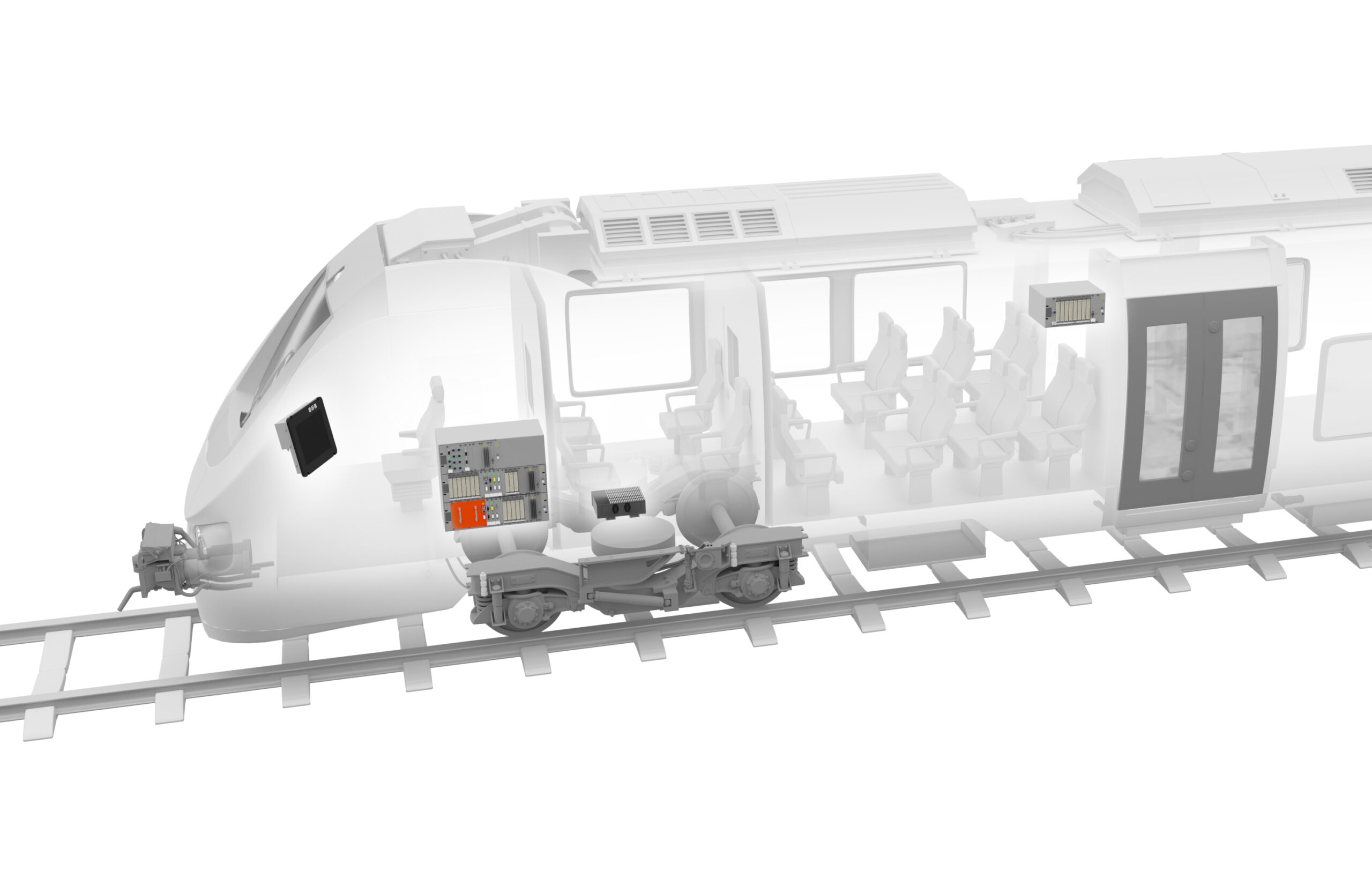
This article introduces the core principles of TCMS and explains its role within modern train systems. It also outlines the design philosophies that influence how TCMS platforms continue to evolve.
What does TCMS stand for?
TCMS stands for Train Control and Management Systems.
What Is a Train Control and Management System (TCMS)?
A Train Control and Management System (TCMS) is the centralised control platform of a train. It functions as the “nervous system” that supervises, coordinates, and communicates with all major onboard systems. It integrates control, diagnostics, and communication functionalities to ensure the safe, reliable, and efficient operation of both modern and legacy rolling stock.
The system is designed to provide real-time information to the driver, onboard personnel, and external systems. This ensures that each subsystem operates in harmony and according to predefined rules and safety protocols.
What Are the Core Functions of a TCMS?
A well-implemented TCMS performs several essential functions:
- Subsystem Control and Monitoring
Manages traction, braking, lighting, HVAC, and door equipment.
- Communication Management
Coordinates information flow between systems across the train. It does this through the train communication network.
- Diagnostics and Maintenance Support
Provides real-time data, historical logs and health status. This actionable information highlights fleet condition trends and provides structured insights that support data‑driven decisions for operations and maintenance teams.
- Passenger Information Management
Controls onboard announcements, display screens, and emergency communication systems.
- Energy Management
Tracks and optimises energy use across traction and auxiliary systems.
What Are the Key Components of TCMS Architecture?
A complete TCMS includes several essential components that work together to control, monitor, and coordinate onboard systems.
- Train Communication Network (TCN)
This provides the digital backbone of the TCMS. Two main layers support data exchange:- Train Backbone
Connects multiple vehicles in the train. This layer enables communication between each vehicle’s control units and the TCMS central unit. The train backbone connects vehicles using standard technologies such as WTB or ETB. These systems support IP-based messaging and high-speed data transfer for train-wide information exchange. - Vehicle Bus
Connects onboard subsystems for intra-vehicle communication. Common technologies include MVB (Multifunction Vehicle Bus), CAN, Serial Links and Ethernet Consist Network (ECN). - Both layers follow IEC 61375 requirements for deterministic communication.
- Train Backbone
- Vehicle Control Units (VCUs)
Vehicle Control Units act as local processors within each vehicle. They run automation logic, manage diagnostics, and interface with the driver’s HMI. Their distributed design improves redundancy and scalability. VCUs may directly control traction, braking, HVAC, doors, lighting, CCTV and Passenger Information Systems. They communicate through the TCN or via gateways when needed.
- TCN Gateways
TCN gateways allow the TCMS to communicate with external or legacy systems. They convert data between different protocols, enabling safe and reliable exchange across interfaces such as CANopen, RS‑485 and proprietary subsystem connections.
- Remote I/O Systems
Remote I/O units are placed throughout the train to connect sensors and actuators. They collect digital and analogue signals and transmit them over the vehicle bus, reducing cabling and centralised hardware requirements.
- Event Recorders
Event recorders store key operational data, such as faults, control commands, and driver actions. Their time‑stamped logs support diagnostics, investigations and regulatory requirements. Advanced versions provide secure storage and remote retrieval capabilities.
- Human-Machine Interfaces (HMIs)
HMIs provide drivers and maintenance teams with:- Real-time feedback and alarms
- Manual subsystem control
- Access to logs and diagnostics
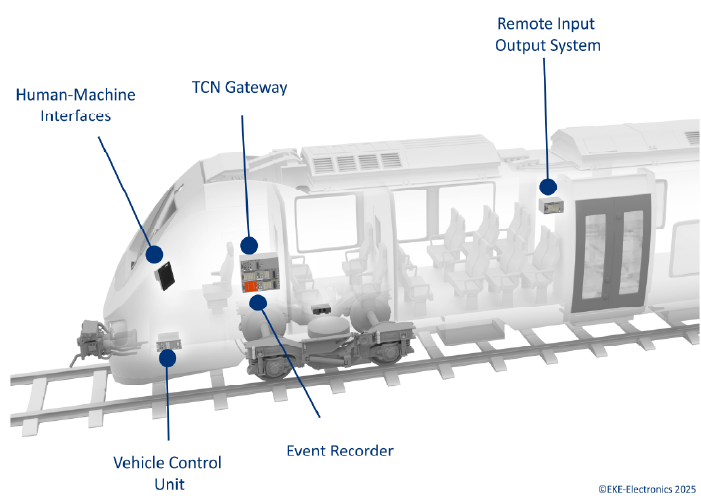
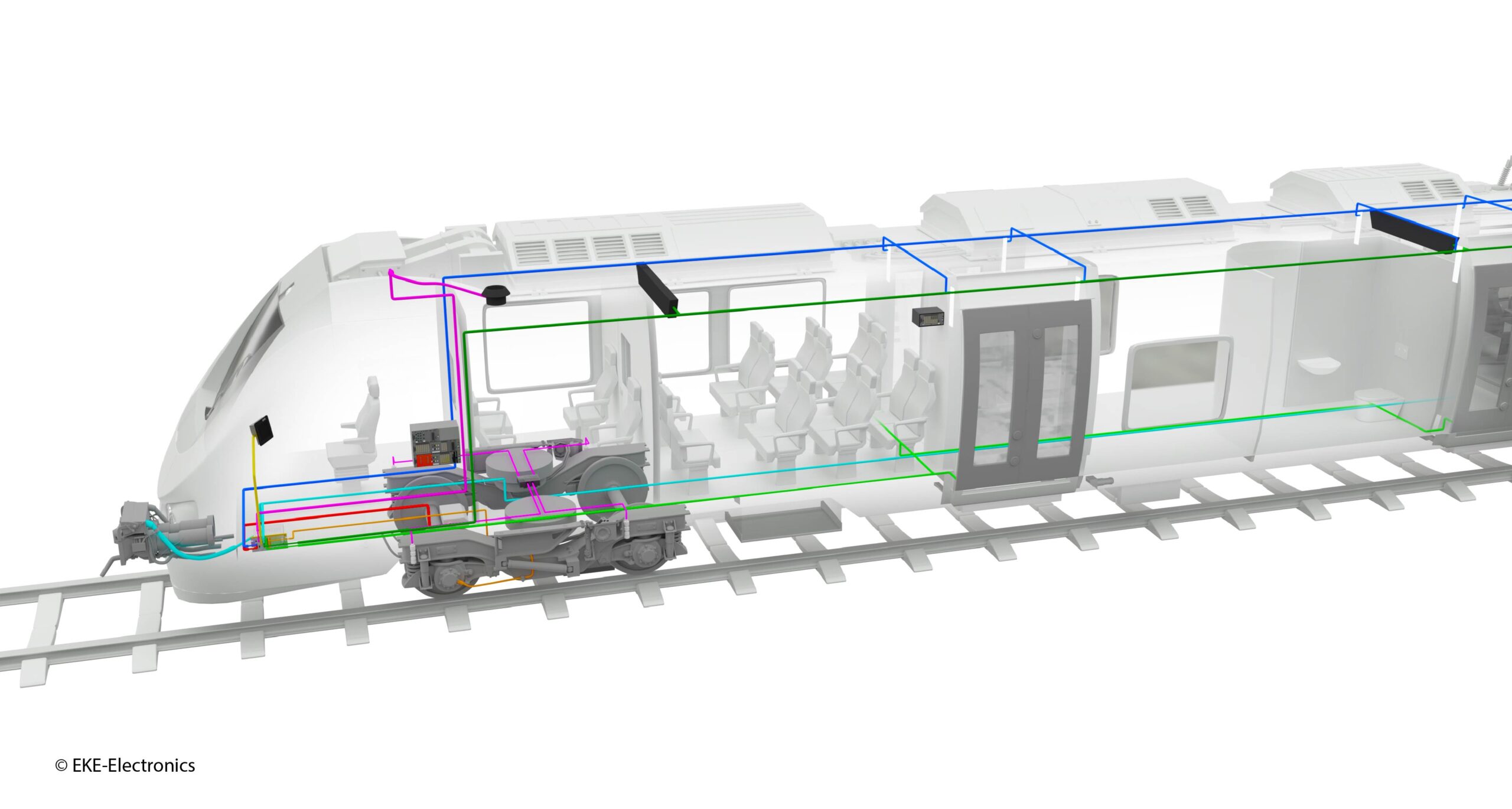
Figure 1 – Example of a Train Control & Management System
Does TCMS Integrate with Safety Applications?
Yes, it does. TCMS platforms support several functional safety applications that protect passengers, crew, and onboard equipment. These functions must operate reliably under all defined operating conditions.
Key examples of functional safety applications within TCMS include:
- Automatic Selective Door Operation (ASDO) – Opens doors only when the train is correctly aligned with a safe platform area.
- Hot Axle Box Detection (HABD) – Continuously monitors axle temperatures to detect overheating conditions that could lead to equipment failure or fire hazards.
- Vigilance Control Systems – Monitors the driver’s alertness. Warnings or interventions are triggered if signs of incapacitation or inattention are detected.
- Lateral Acceleration Monitoring – Continuously monitors forces which may cause excessive tilting or increase the risks of derailment.
As train technology advances, new safety functions continue to appear. These include more detailed real‑time monitoring, adaptive control for alternative propulsion systems, and coordinated safety functions across both onboard and wayside networks.
What Are the Key Cybersecurity Requirements for Modern TCMS?
Cybersecurity has become a core requirement as digital systems are becoming increasingly integral to train operations. As TCMS systems become more connected firmware must include protection against:
- Firmware authentication (e.g., digital signatures, secure bootloaders)
- Unauthorised access
- Malware injection
- Tampering and reverse engineering
The EU Cyber Resilience Act (CRA) establishes new obligations for products with digital components, including TCMS platforms. TCMS manufacturers must demonstrate:
- Security-by-design and Security-by-default principles,
- Structured vulnerability management processes.
- Reliable security update mechanisms.
Depending on the product’s classification, CRA compliance may involve self-assessment or third-party certification.
Train builders and integrators must verify that all TCMS components meet CRA‑aligned standards. This includes protected communication channels and secure firmware update pathways. This ensures that safety-critical and operational systems remain protected against evolving cyber risks in the rail environment.
Which Standards Govern TCMS?
Key standards include
- EN 50155 – Standards for rolling stock and electronic equipment
- EN 45455-2 – Standards for Fire Safety
- IEC 61375 – Communication network and protocol architecture
- IEC 61131 – Standards for programmable controllers
- IEC 62443-4-2 – Standards for Cybersecurity
- EN 50126– Standards for the specification and demonstration of Reliability, Availability, Maintainability and Safety (RAMS)
- EN 50129– Standards for communication, signalling and processing systems. Safety related electronic systems for signalling
- EN 50716– Requirements for software development
How Does Platform Software (Firmware) differ from Application Software in TCMS?
Platform software or firmware is tightly integrated with hardware. The firmware delivers deterministic behaviour for safety and real-time control.
Application software defines the functionality of the hardware, analytics and user interaction. Suppliers vary widely in how configurable and available these applications can be.
Typical approaches include:
- Pre-built application software, which may be limited in functionality and cannot be configured.
- Configuration tools that allow a degree of customisation within predefined limits.
- Custom-built software tailored to customer requirements.
- Tool‑based platforms and training that enable customers to build and maintain their own logic.
How Does TCMS Fit Within the Onboard Ecosystem?
The TCMS acts as the highest level of control platform. The architecture coordinates onboard subsystems and external systems such as ETCS and depot management platforms.
Examples include:
- ETCS: Ensures movement authority and enforces speed restrictions
- Passenger Wi-Fi/CCTV/etc.: Operates independently, may interface with TCMS
- Remote Diagnostics: May be stand-alone or integrated into TCMS
The platform ensures key functions such as brake coordination and consist recognition in multiple‑unit configurations.
What is the life expectancy of TCMS?
TCMS platforms often match the service life of the train. Most fleets operate for 25 to 35 years. Mid-life refurbishments often introduce upgrades that address obsolescence or new operational requirements.
What Should Be Considered When Selecting a TCMS?
Selecting a TCMS supplier is a strategic, long-term decision for the entire fleet. The system’s architecture must support changing operational requirements, evolving regulatory standards and future technologies.
It is important to choose a TCMS that ensures streamlined integration and harmonisation across all train sub-systems. A well‑integrated TCMS reduces the number of communication networks and cabling architectures across the train. This reduction decreases complexity and supports lower lifecycle costs.
Equally important is the expertise behind the system. At EKE-Electronics, we provide field-proven, modular TCMS platforms backed by four decades of engineering experience. Our solutions are designed with durability, maintainability, and long-term support in mind.
Our headquarters in Espoo, Finland, is home to a team of approximately 100 professionals. Many have over a decade of experience. This continuity and depth of knowledge allow us to understand and meet the specific demands of modern and legacy rolling stock.
We work closely with customers to develop solutions that align with their technical, operational, and lifecycle requirements, whether for TCMS or Functional Safety applications. This practical, system-level understanding helps ensure long-term performance and reliability in real-world conditions.