Remote Input Output Systems

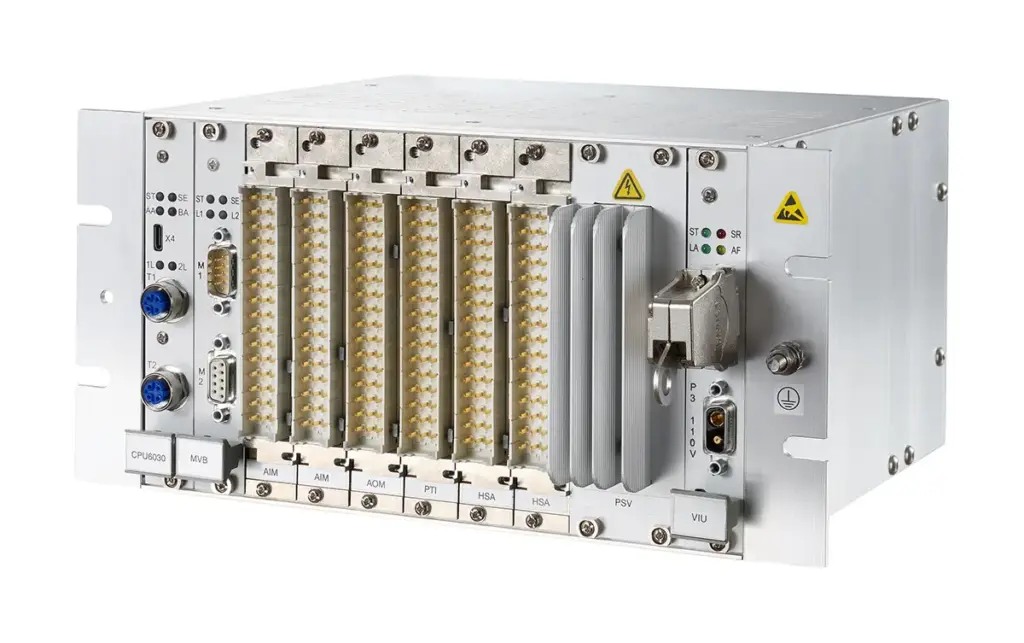
EKE-Trainnet® Remote Input Output Systems provides efficient data input and output management with support for analogue and digital I/O. This minimises cabling complexities while ensuring flexibility and optimised system performance.

The Remote Input Output Systems can connect with sub-systems and the Train Communication Network. These control and diagnostics systems can run on the same train computer that is used for Gateway functionalities, providing a more compact and cost effective solution.

badge
COMPLIANCE:
EN 50155, EN 45545
Technical Specification for Remote Input Output Systems

RIOM Key Features

Dual-homing with TRDP

Dual‑homing with TRDP connects each RIOM to two independent Ethernet paths, ensuring continuous real‑time
I/O data flow even if a link or device fails, with optional SDTv2 support enabling SIL 2 capable data transmission for safety‑critical applications.

High I/O density

Up to 576 digital I/O channels in a single unit support high signal density while reducing hardware and simplifying system design.

Mixed Non-SIL and SIL Applications

SIL 2 and non‑SIL modules can co‑exist in one Remote I/O system, reducing the number of racks, power feeds, and field connections required through shared hardware.

Application‑ready I/O platform

Application logic can run directly on the RIOM, improving response times, reducing data transfer, and lowering system complexity by minimising the need for additional computing hardware.

Wide range of input output modules

EKE-Trainnet® Remote Input Output Systems offers a wide range of I/O modules.
DIGITAL I/O MODULES
  • 24 Input channels
  • 8 input/output channels
  • up to 8 relay outputs
  • 8 solid state outputs (only available by request)
ANALOGUE I/O MODULES
  • 10 voltage channels (AIM)
  • 10 current channels (AIM)
  • up to 16 voltage channels (AIO)
  • 16 output channels (in 4 groups of 4 isolated channels)
  • 4 voltage channels
  • 4 current channels
TEMPERATURE SENSOR INPUT
  • up to 6 measurement channels
  • up to 6 measurement channels

Cybersecurity for RIOM applications

Our Remote I/O Systems use a cybersecurity architecture that meets IEC 62443-4-2 Security Level 2 and follows EU Cyber Resilience Act principles for secure-by-design operation. This approach protects firmware, applications and configuration data throughout
the lifecycle, supported by controlled and CRA-compliant update processes.

Access control restricts configuration changes and application downloads, while operational and engineering interfaces remain separated to reduce exposure. Security event logging supports maintenance teams by providing clear records for diagnostics and incident analysis, helping operators maintain secure and dependable distributed I/O performance.

Build a Remote Input Output System using the following modules

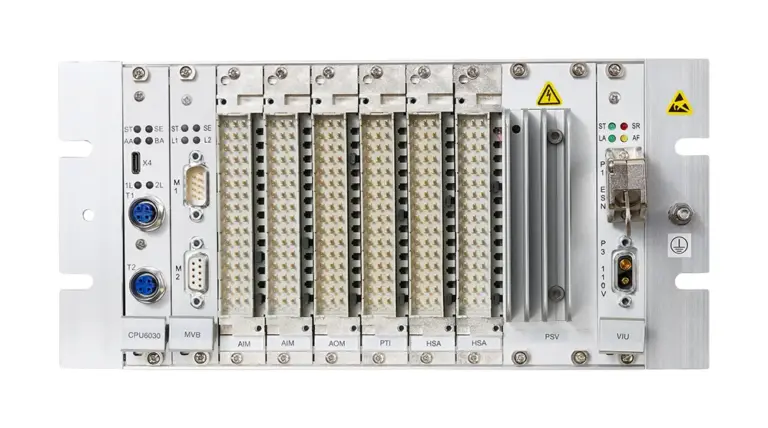
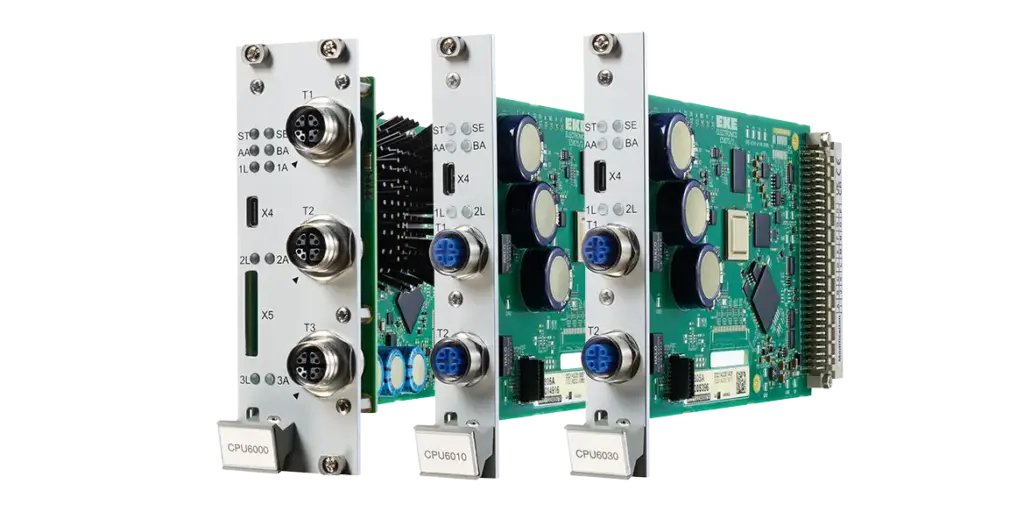
The Remote Input Output System usually consists of a Central Processing Unit or MVB Interface, I/O modules, a power supply and a rack. Click on an image to explore related content.

Build Your Own Applications

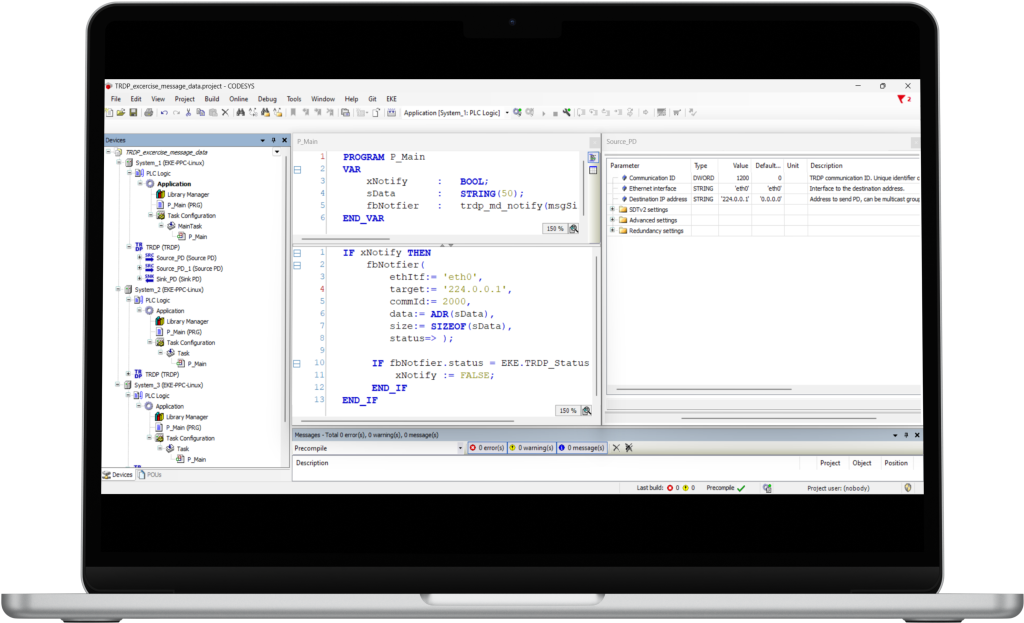
EKE-Trainnet® Remote Input Output System is built on an open-source Linux platform powered by CODESYS®. It allows you to develop custom applications.

If you prefer to develop in-house. EKE-Electronics provides training, tools, and guidance to support your development efforts. Alternatively, EKE-Electronics has expertise to develop fully or partially software on your behalf. 

Why Choose EKE-Electronics for Remote Input Output Systems?

Engineered for excellence in rail technology, EKE-Trainnet® Remote Input/Output System supports SIL 2 development. Our system is designed to seamlessly integrate into your operations, providing the reliability and advanced capabilities needed for efficient and effective control.

Very high I/O density

Designed with a very high I/O density, the EKE-Trainnet® Remote I/O System accommodates numerous signals within a compact space. In a standard 3U, 84TE rack, it can include up to 576 digital I/O channels (18x32ch).

This high density is crucial for high-speed trains and Electric Multiple Units (EMUs), offering space-saving benefits, a decentralised network architecture, and simplified I/O cabling, which ultimately reduces costs.

Support for serveral vehicle buses

Supporting multiple vehicle buses, the EKE-Trainnet® Remote I/O System excels by managing several identical or different buses simultaneously. This capability simplifies the train design process, allowing for a more streamlined and efficient system architecture.

By integrating various buses into a single system, enhances flexibility and reduces complexity, making it an ideal choice for modern rail applications.

Dual homing with TRDP

EKE-Trainnet® Remote I/O System features dual-homing with Train Real-Time Data Protocol (TRDP), ensuring unparalleled reliability and continuity.

This dual-homing capability provides redundant pathways for data communication, safeguarding against potential failures and enhancing system stability.

Ideal for high-speed and critical applications, this feature ensures uninterrupted performance and dependable operation for your train systems.

Relevant News & Blogs

Frequently Asked Questions

A Remote Input Output (I/O) System is a component of the train’s control and management system (TCMS) that extends the number of available I/O channels of the TCMS. It connects and manages various sensors and controls throughout a train and allows these components to communicate with the train’s main computer without needing a lot of wiring.

SIL or Safety Integrity Levels are defined levels of risk reduction applied to safety-related systems. They are designed to automatically prevent dangerous failures or to control them when they occur. SIL levels range from SIL 1 to SIL 4, with SIL 4 providing the highest level of risk reduction.

For more information, read our blog about implementing SIL for train products.

Safety Integrity Level (SIL) is a measure of the reliability and risk reduction capability of safety-related systems. For railway applications, SIL levels are defined by standards such as IEC 61508 and EN 50126/EN 50128/EN 50129.

Read more about Safety Integrity Levels

A software development environment is designed to facilitate the development of software applications. It provides programmers with the necessary tools, features, and resources needed to write, test, debug, and deploy software efficiently.

Read how the EKE-Electronics’ Software Development Environment powered by CODESYS® can help you build your own TCMS applications.

We have a range of different power supplies supporting 24-11VDC:

PSV models:

  • PSV1133: 24V
  • PSV1513: 72V
  • PSV2513: 36..52V
  • PSV3034: 48..110V 
  • PSV1018: 110V

PSR models:

  • PSR3032: 110V

The key difference between the PSV and PSR is that the PSV provides an 80 ms grace supply following loss of input power.

EKE-Trainnet® Train Control and Management Systems
EKE-Trainnet® Technical Specifications
Find out how we can work together

Technical Specification for Remote Input Output System

Dimensions (W x H x D):

3U 44TE Rack

280 mm x 133 mm x 215 mm (installation width 240 mm)

3U 84TE Rack

483 mm x 133 mm x 215 mm (installation width 443 mm)

6U 84TE Rack

483 mm x 266 mm x 215 mm (installation width 443 mm)

Weight:

44TE Option

2.6 Kg (+ I/O weights)

84TE Option

4 Kg (+I/O weights)

Input Power:

24…36 V DC -30/+25%

or 48…110 V DC -30/+25%

Temperature Range (operational):

-40 °C…+70 °C

MTBF (40 ºC ambient temperature):

Depends on installed I/O modules

Interface options:

Ethernet RIOM:

1 x 10/100 Mbits/s M12

MVB RIOM:

Electrical Medium Distance (EMD) with two sub D-9 connectors (isolated Electrical Short Distance (ESD) physical interface)