Our TCN Gateways offer a highly flexible and versatile solution. By selecting modules from the EKE-Trainnet® range, you can build gateways with the interfaces and functions that best match your requirements.


The CPU6000 Series provides a robust and secure processing platform for gateway applications, delivering
reliable protocol routing and dual‑homed Ethernet communication with long‑term maintainability and efficient complexity.
A wide range of bus interface modules can be integrated with other modules such as rugged memory module and I/O modules into the same rack to build a compact and cost-efficient train computer.
Our Gateway variants include an ETCS/ATO configuration with the standard interfaces defined in Subset‑119 and Subset‑139. This setup supports the integration of signalling and automation systems.
With the appropriate modules, Gateway products can also function as vehicle control units, combining gateway and control functions on a single platform to reduce hardware and simplify system architecture.
WTB, MVB, CAN, Serial Links and Ethernet supported.
EKE-Trainnet® TCN Gateways can combine some or all of the following bus technologies, as your needs require. Most of our TCN Gateway modules have interface connectors at the front and communicate with each other via the back plane (includes VME bus).
The Wire Train Bus (WTB) interface usually has two DE-9 connectors with redundant lines integrated in each connector. A version with 4 connectors is available as an option.
The Wire Train Bus with Fritting (WTF) has the same features as the WTB but with fritting.
The Multifunction Vehicle Bus (MVB) physical medium can be ESD+ or EMD. ESD+ and EMD have two DE-9 connectors with redundant lines integrated into each connector. The MVB can also be used as a train bus.
The CAN Vechicle Bus (CVB) module has two DE-9 connectors and is used to create up to two CAN buses. The 2 CAN ports can be independently configured as CAN 2.0 A/B or CANopen®.
Serial Links interfaces (SIU) can be used to create Vehicle Buses even though they are commonly used for direct connection to sub-systems. The RS-485 and RS-422 physical layers are supported. Modbus and customised protocols can be used.
An Ethernet Consist Network (ECN) can function as both a vehicle bus and a train bus for fixed consists.
The Ethernet Train Backbone (ETB) is a high-speed communication infrastructure used within trains to interconnect various subsystems, enabling reliable and standardised data exchange across the entire train.
EKE-Trainnet® Gateways can be supplied as certified SIL 2 Safety Gateways. They provide a vital interface between the train’s critical systems or subsystems and the TCMS.
The Safety Gateways utilise the same hardware as the standard TCN Gateway, with enhanced functionality provided by the Safety Data Transmission protocol version 2 (SDTv2), ensuring reliable and safe data transmission.
All our Gateways use a cybersecurity architecture that meets IEC 62443-4-2 Security Level 2 and aligns with EU Cyber Resilience Act principles for secure-by-design operation.
The platform is built on the same next-generation CPU line used across the TCMS family, providing a hardened processing environment designed to resist tampering and unauthorised software through a cryptographically protected secure-boot chain.
In collaboration with RazorSecure, we have developed the EKE‑Trainnet® MVB Intrusion Detection.
The system identifies unusual and unexpected network behaviours. This allows train operators to detect and respond to threats before they impact operations.
As a company, we value long-term expertise and commitment. Many of our team members have been with us for over a decade, bringing deep industry knowledge and continuity to our projects.
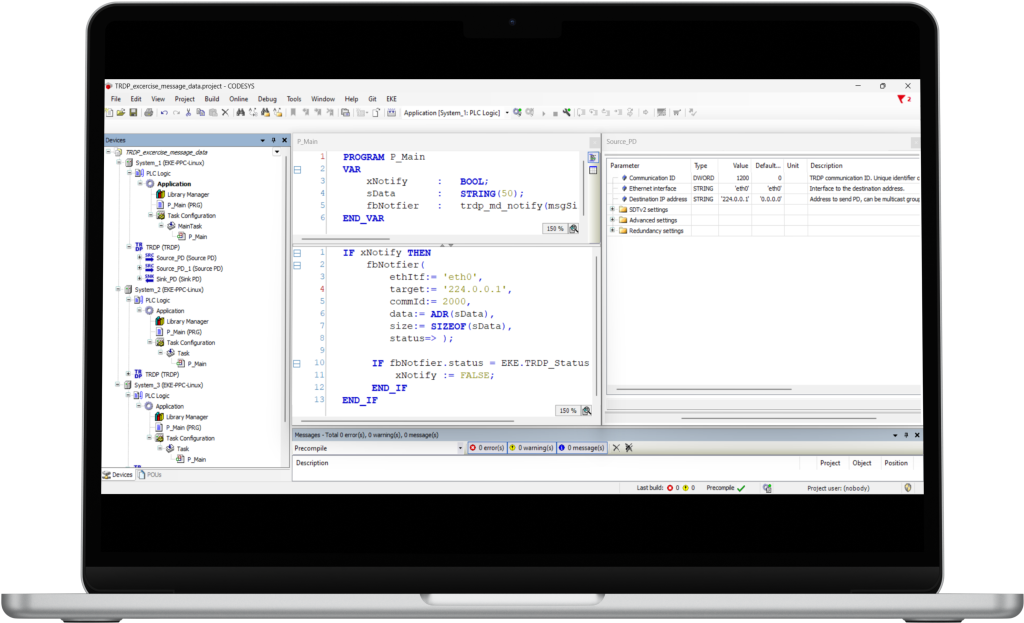
EKE-Trainnet® TCN Gateway is built on an open-source Linux platform powered by CODESYS®. It allows you to develop custom applications.
If you prefer to develop in-house. EKE-Electronics provides training, tools, and guidance to support your development efforts. Alternatively, EKE-Electronics has expertise to develop fully or partially software on your behalf.
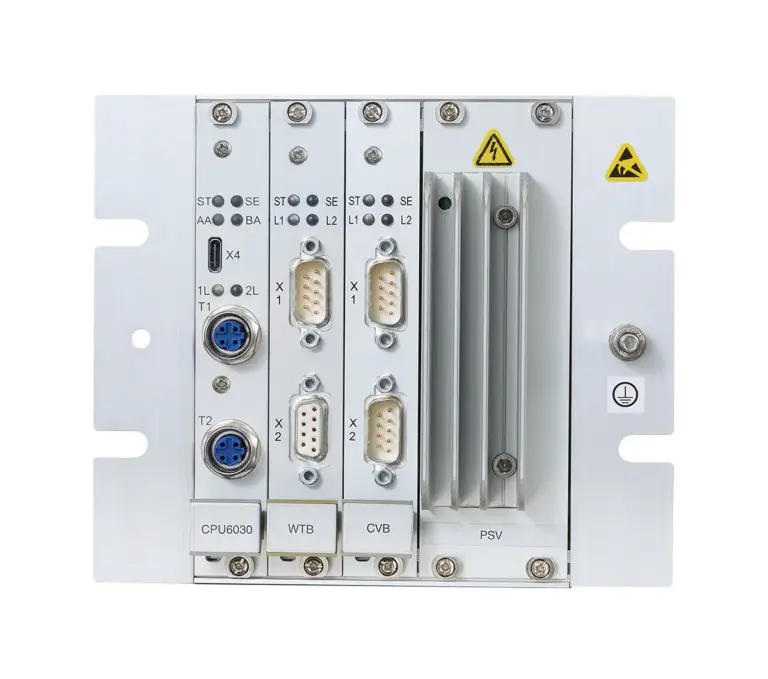
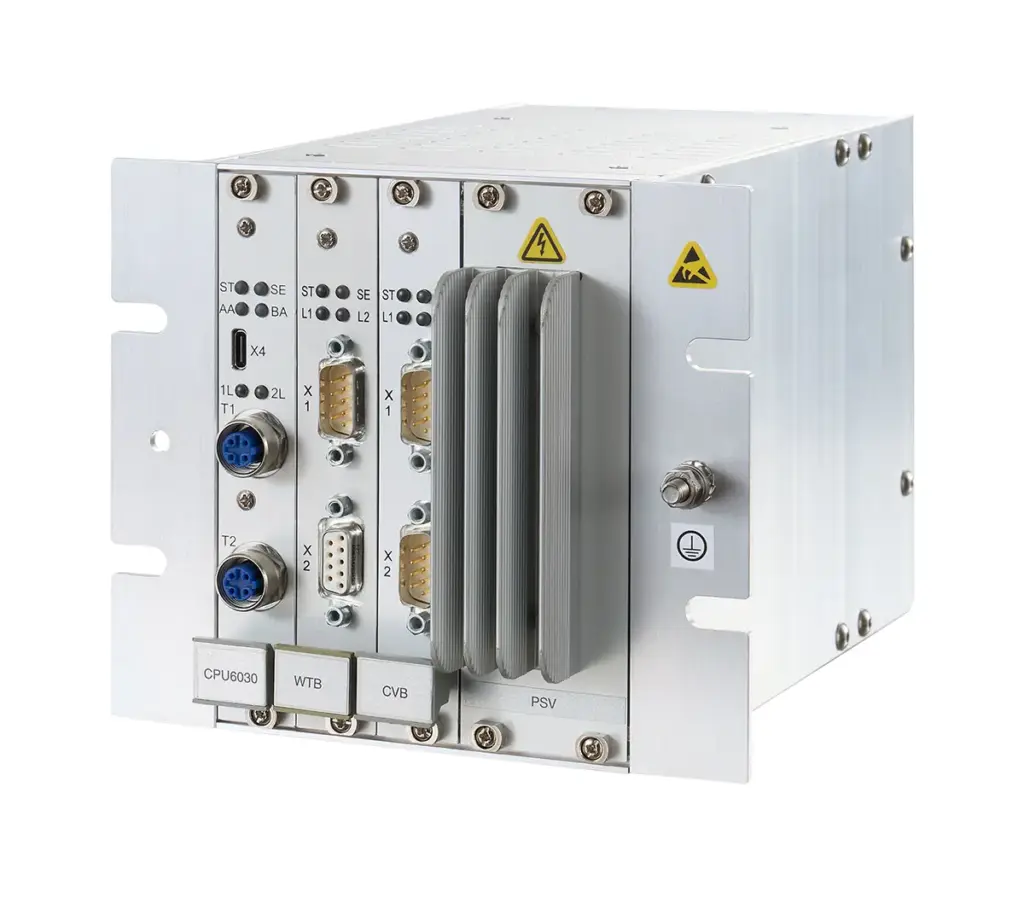
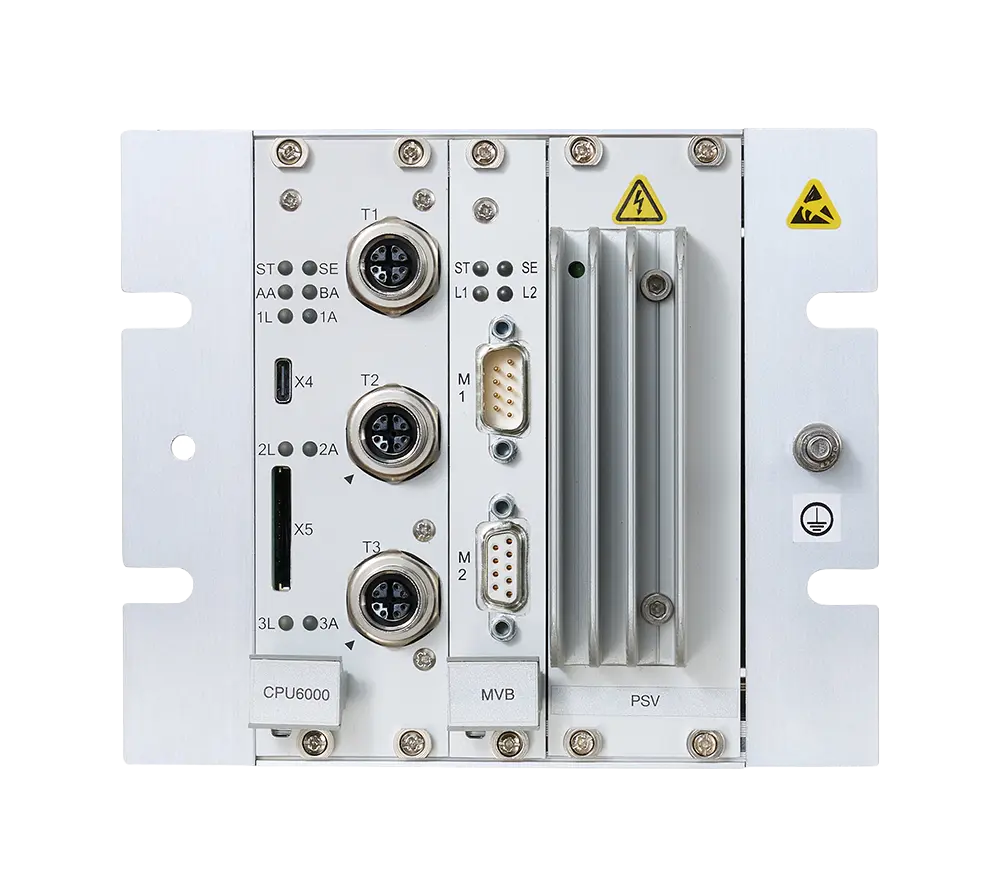
An EKE-Trainnet® TCN Gateway usually consists of a Central Processing Unit (CPU), at least one bus interface module, a power supply and a rack. Click on an image to explore related content.
EKE-Trainnet® TCN Gateways are modular, enabling you to precisely select the train bus and vehicle bus technologies you require. Modules can be combined for a very flexible and versatile solution. The modular design enables you to select only the features you need for a cost efficient solution. It also means repairs and upgrades are quick and easy.
Below is an example of a TCN gateway made up of a selection of common modules. Hover over each area to view a brief description or click to access the full module page.
EKE’s commitment to reliability and quality ensures that our TCN Gateways deliver superior performance and integration options.
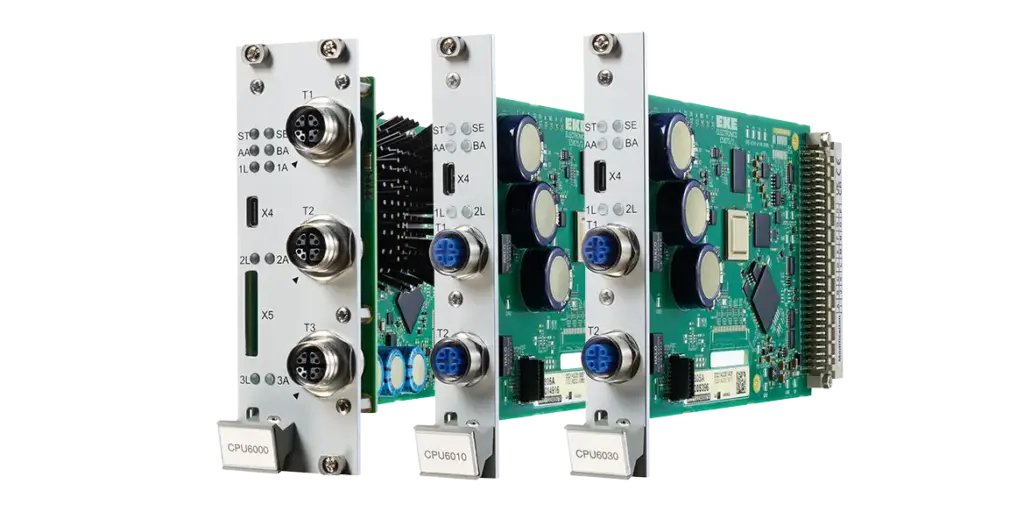
EKE has developed a comprehensive range of CPUs, bus interface modules and power supplies to accommodate most technical requirements and budgets.

EKE-Trainnet® TCN Gateways are known for their adaptability, enabling seamless integration of subsystems with different communication protocols. These gateways allow application software to control subsystem functions, running on the same train computers for a compact, cost-effective solution.

Ease of use is a key factor when choosing the right TCN Gateway for your vehicle and EKE-Trainnet® TCN Gateways are designed to prioritise user-friendly operation. They have interface connectors at the front and communicate with each other via the backplane, which includes a VME bus. Mechanical coding of DE-9 connectors is available as an option.

Train Communication Network or TCN Gateways are a critical component of a train system. A TCN Gateway is a train computer that acts as a converter between two protocols, allowing data to flow from various subsystems using different bus protocols to ensure that they work together seamlessly.
An ETCS-TIU (Train Interface Unit) Gateway acts as an interface between the ETCS OBU (On-board Unit) and the existing TCMS. This ensures that legacy fleets can be integrated with the advances being made by the European Train Control System (ETCS) technology.
EKE-Trainnet® Gateways can be supplied as certified SIL 2 Safety Gateways making them suitable for use as ETCS-TIU Gateways.
Safety Gateways are similar to TCN Gateways but are certified SIL 2 Safety Gateways. They provide a vital interface between the train’s critical systems or subsystems and the TCMS.
One example is their use as ETCS-TIU Gateways, where they serve as vital links between otherwise incompatible systems. These gateways support seamless data exchange, enabling modern ETCS functionality to be integrated with legacy rolling stock.
SIL or Safety Integrity Levels are defined levels of risk reduction applied to safety-related systems. They are designed to automatically prevent dangerous failures or to control them when they occur. SIL levels range from SIL 1 to SIL 4, with SIL 4 providing the highest level of risk reduction.
For more information, read our blog about implementing SIL for train products.
Safety Integrity Level (SIL) is a measure of the reliability and risk reduction capability of safety-related systems. For railway applications, SIL levels are defined by standards such as IEC 61508 and EN 50126/EN 50128/EN 50129.
A software development environment is designed to facilitate the development of software applications. It provides programmers with the necessary tools, features, and resources needed to write, test, debug, and deploy software efficiently.
We have a range of different power supplies supporting 24-11VDC:
The key difference between the PSV and PSR is that the PSV provides an 80 ms grace supply following loss of input power.
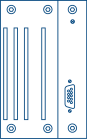
3U 44TE Rack
280 mm x 133 mm x 215 mm (installation width 240 mm)
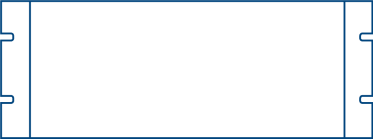
3U 84TE Rack
483 mm x 133 mm x 215 mm (installation width 443 mm)
6U 84TE Rack
483 mm x 266 mm x 215 mm (installation width 443 mm)
Depends on rack and installed modules
24, 36, 48, 52, 72 or 110 V DC
-40 °C…+70 °C
Depends on installed modules
WTB, MVB, CAN, Ethernet, Serial Links.